Pork Belly and Yu Choy Stir Fry Recipe
A recipe for a quick stir fry using pork belly and yu choy, where the seared pork provides both flavor and cooking fat.
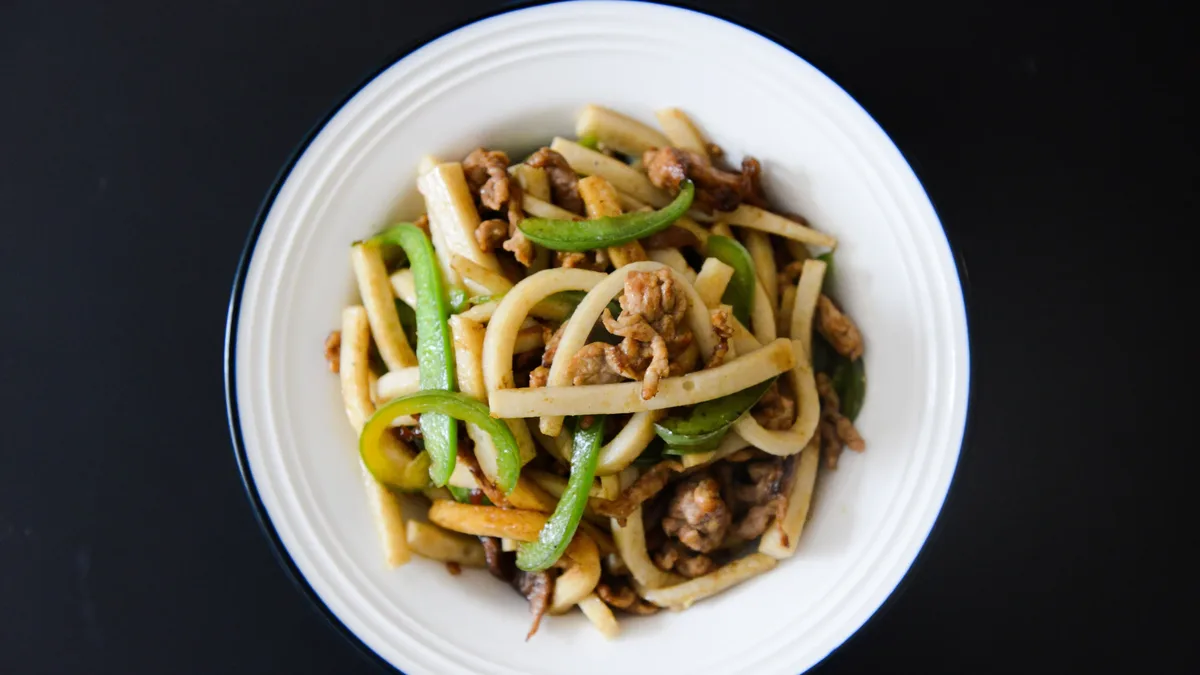
This recipe from China Sichuan Food details a simple stir fry combining pork belly and yu choy. The method uses the fat rendered from searing the pork belly to cook the vegetables, adding savory depth.
The Role of Pork Fat
The author notes that while a standard Chinese green vegetable stir fry might use minced garlic, adding lard or pork crackling is recommended for extra flavor. The recipe uses seared pork belly as a modern, accessible substitute for traditional pork cracklings. The author recalls a childhood where pork cracklings, a byproduct of rendering lard for storage, were used to enrich dishes like stir-fried cabbage.
Ingredients and Preparation
The ingredient list is short. Pork belly and yu choy are the main components, supported by basic aromatics and seasonings.
| Ingredient | Quantity |
|---|---|
| Pork belly | 100 g |
| Yu Choy | 200 g |
| Ginger | 1/2 thumb |
| Garlic | 2 cloves |
| Cooking oil | 2 tbsp. |
| Light soy sauce | 1 tbsp. |
| Salt | pinch |
Preparation involves slicing the ginger, garlic, and pork belly. The pork belly rinds are removed. The yu choy is peeled of its old skin and broken into halves.
Cooking Instructions
The cooking process is a two-step stir fry. First, a small amount of oil is added to a wok. The pork belly slices are fried for three to four minutes over medium heat until well seared. This step releases fat from the pork.
Next, the garlic, ginger, and yu choy are added to the wok. The stir fry is cooked over high heat. Because the vegetable is not blanched first, the wok is covered with a lid for half a minute to one minute to help it cook through. Finally, salt and light soy sauce are added, everything is mixed well, and the dish is served hot. The author states the animal fat makes the yu choy softer and deeply savory.
A Modern Take on Tradition
The recipe presents a quick method for a flavorful side dish. It connects to a traditional cooking practice of using pork fat while employing a readily available cut of meat. The dish is described as an ideal, quick accompaniment for a meal.