Tonpeiyaki: The Foldable Omelette Technique
Tonpeiyaki is a soft omelette with pork and cabbage, topped with okonomi sauce and mayo. Its foldable texture comes from potato starch mixed into the eggs.
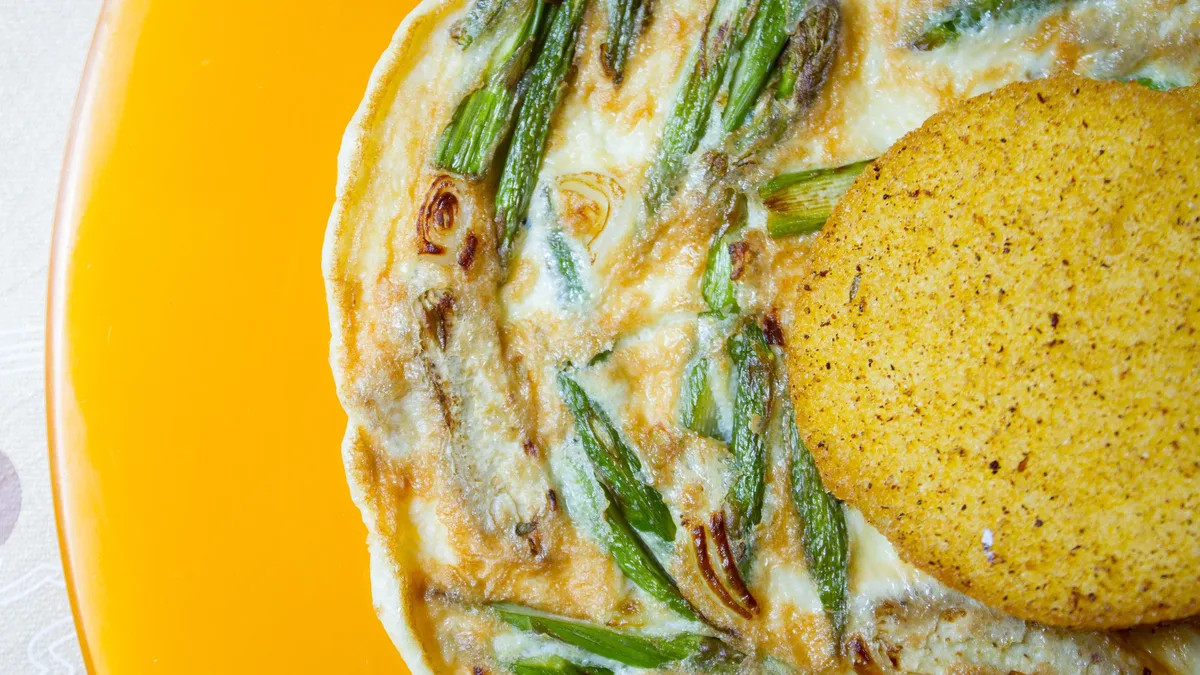
Tonpeiyaki is a Japanese dish of pork belly and cabbage wrapped in a soft omelette, finished with okonomi sauce, Japanese mayonnaise, and aonori seaweed. According to the recipe from Just One Cookbook, the entire process takes about 30 minutes, making it a fast weeknight dinner option. For more quick and delicious meal ideas, check out our fixtures page.
This dish offers the signature flavors of Osaka's okonomiyaki but replaces the thick flour batter with a delicate egg wrapper. The result is a lower-carb meal that cooks significantly faster. The recipe's author, Nami, states she makes it more often than traditional okonomiyaki because it relies on staples she usually has on hand: eggs, cabbage, and thin-sliced pork belly.
Why the Potato Starch Slurry is Crucial
The defining technique for a successful tonpeiyaki is not the filling but the egg mixture. Adding a slurry of potato starch and water to the beaten eggs is what creates a silky, cohesive omelette that can be folded without tearing. The source calls this "the difference between an omelette that wraps cleanly and one that tears." Cornstarch can be used as a substitute if potato starch is unavailable.
Whipping the eggs correctly is also important. The instructions advise cutting through the eggs with chopsticks instead of stirring in circles, stopping while the egg still falls in a thick ribbon. "Whipped-in air makes bubbles that tear the omelette," Nami notes.
How to Build and Flip the Omelette
The process begins by sautéing the filling. Thin-sliced pork belly is cooked until no longer pink, then shredded cabbage is added and wilted. The filling is seasoned with soy sauce and mirin before being removed from the pan. The pan must be washed clean to prevent the egg from sticking to any browned bits.
For the omelette, oil is heated in the clean pan until it shimmers. The egg mixture is poured in. When big bubbles form, they should be popped with a chopstick so the runny egg can fill the holes. This helps cook the omelette evenly. Once the bottom is just set, the warm filling is placed in the center and the sides are folded over.
The flip is a critical step. To avoid breaking the omelette, the folded parcel is pushed to the edge of the pan. A plate is angled underneath, and the omelette is quickly flipped onto it, seam-side down. The potato starch in the egg helps it hold its shape during this maneuver.
Flexible Variations for the Filling
The recipe is highly adaptable. The source provides several suggestions for altering the core ingredients to suit different tastes or pantry contents.
Make-Ahead and Serving Advice
For even faster assembly, the pork and cabbage filling can be sautéed a day in advance and stored in the refrigerator. It must be warmed before being added to the omelette, however, as the omelette cooks so quickly that a cold filling would leave a cold center. For detailed storage and reheating instructions, see our stats page.
Leftover tonpeiyaki can be stored in the refrigerator for up to three days, though the source states it does not freeze well. Reheat it gently in a covered pan or in the microwave.
To serve, the source recommends pairing it with simple Japanese sides like cold tofu (hiyayakko), miso-glazed rice balls (yaki onigiri), or a clear noodle soup. The dish originated in postwar Osaka at a restaurant called Hontonpei, where it was inspired by food encountered in Siberia. The final detail is the trio of toppings: a drizzle of glossy okonomi sauce, a zigzag of Kewpie mayonnaise, and a sprinkle of green aonori seaweed.