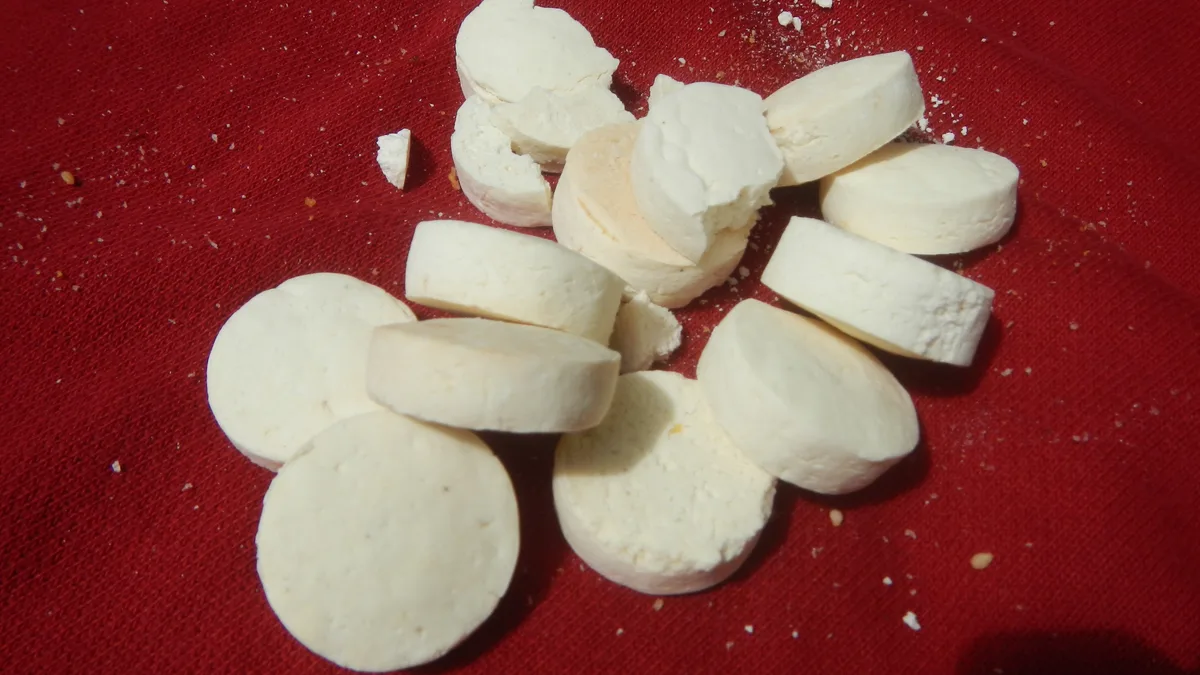
Breads
| Core ingredient | Flour, water, salt, yeast (or leavening agent) |
|---|---|
| Leavening method | Biological (yeast), chemical (baking powder/soda), or mechanical (steam) |
| Key technique | Dough development (kneading, folding, fermentation) |
| Cooking method | Baking, frying, or steaming |
| Texture | Ranges from soft and airy to dense and chewy |
| Shelf life | Ranges from hours (e.g., flatbreads) to months (e.g., hardtack) |
| Original use | Sustenance, often as a staple food for carrying and storing |
Origin and history
Bread is a staple food with origins dating back to the Neolithic period, over 10,000 years ago, with its earliest evidence found in the Middle East. The first breads were likely simple flatbreads made from crushed grains mixed with water and baked on hot stones. The discovery of using naturally occurring yeasts for leavening is attributed to ancient Egypt around 3000 BCE, revolutionizing bread's texture. The development of bread is inextricably linked to the domestication of cereal grains like wheat and barley. Throughout history, bread has held profound cultural, religious, and economic significance across countless civilizations. Its production evolved from household tasks to specialized bakeries, particularly in ancient Rome and Greece, shaping social structures.
Ingredients
Flour (typically wheat, for its gluten-forming proteins) Water Salt Yeast (or another leavening agent like sourdough starter)
How to make it
- Combine flour, water, yeast, and salt in a bowl to form a shaggy dough. 2. Knead the dough thoroughly on a floured surface until it becomes smooth and elastic. 3. Place the dough in a lightly oiled bowl, cover it, and allow it to rise until doubled in size. 4. Gently deflate the risen dough and shape it into a loaf or other desired form. 5. Place the shaped dough into a prepared pan or on a baking sheet for its final proofing rise. 6. Score the top of the proofed loaf with a sharp blade to control expansion during baking. 7. Bake in a preheated oven until the crust is deeply colored and the loaf sounds hollow when tapped.
Variations and serving
Global variations are vast, from the dense rye breads of Northern Europe to the airy baguettes of France and the soft milk breads of Asia. Flatbreads like naan, tortilla, and pita represent a major category that omits or uses minimal leavening. Bread can be enriched with ingredients like butter, milk, eggs, or sugar, resulting in brioche, challah, or sandwich loaves. Serving methods range from a simple accompaniment to soups and stews to being the base for sandwiches, toast, or bruschetta. Specialty breads incorporate various grains, seeds, nuts, and dried fruits, altering flavor and nutritional profiles. Stale bread finds use in dishes like bread pudding, panzanella, or breadcrumbs, emphasizing its foundational role in minimizing waste.
Overview
Bread is a fundamental food product created through the baking of a dough made primarily from flour and water. Its defining characteristic is the transformation achieved by leavening, which introduces gas bubbles to create a light, aerated structure from a dense paste. The specific technique of gluten development and fermentation is what actually decides whether a bread succeeds or fails. A successful loaf requires a balance of ingredient ratios, mechanical action, time, and controlled heat application. The result can vary from a crisp-crusted, open-crumb artisan loaf to a soft, uniform sandwich bread, all based on method manipulation. It remains a global dietary cornerstone due to its nutritional value, satiety, and cultural versatility.
What to know
The critical technique is managing fermentation, where yeast converts sugars into gas and alcohol, developing complex flavors and strengthening gluten. Proper kneading or folding aligns gluten proteins into a network that can trap these gases, creating the bread's structure. Oven spring, the final rapid expansion in the oven, relies on a sufficiently strong gluten network and adequate steam in the early baking stage. Under-proofing yields a dense crumb and uneven texture, while over-proofing leads to collapsed structure and excessive sourness. Using a scale for ingredients is essential for consistency, as flour volume can vary dramatically with packing and humidity. The quality of flour, specifically its protein content, directly determines the potential for gluten development and the final bread's chew and height.
Common questions
Can I make bread without yeast? Yes, using a sourdough starter (a culture of wild yeast and bacteria) or chemical leaveners like baking soda for quick breads. Why did my bread not rise? Common causes are dead yeast, water that was too hot and killed the yeast, insufficient kneading, or an overly cold proofing environment. How do I store bread to keep it fresh? For short-term use, store in a paper bag or bread box at room temperature; for longer storage, slice and freeze it. What is the difference between bread flour and all-purpose flour? Bread flour has a higher protein content (typically 12-14%) for stronger gluten development compared to all-purpose flour (10-12%). Why is my bread crust tough? A tough crust often results from baking at too low a temperature or not introducing steam in the initial phase for certain crusty breads. Is homemade bread healthier than store-bought? It can be, as you control the ingredients, avoiding preservatives and excess sodium or sugar common in commercial products.
Pros and cons
A significant pro is the complete control over ingredients, allowing for customization for dietary needs and avoidance of additives. The sensory reward of creating a staple food from simple components and the superior flavor of fresh bread are major benefits. A primary con is the substantial time investment, often requiring several hours spread across a day, which does not suit busy schedules. The process has a steep learning curve where minor errors in measurement, temperature, or timing can lead to failed, dense, or misshapen loaves. Many home bakers regret attempting complex, high-hydration doughs without mastering basic techniques first, resulting in frustrating, sticky messes. The common mistake is impatience with proofing, either cutting fermentation short or letting it go too long, which is the most frequent cause of substandard results.
Who it suits
This activity suits individuals who enjoy methodical, hands-on processes and have the patience for slow fermentation and precise technique. It is ideal for those seeking to understand food science and the transformation of raw ingredients through biological and physical processes. Home bakers with flexible schedules who can accommodate the multi-stage timeline of traditional bread making will find it most rewarding. It appeals to people with specific dietary preferences or restrictions who wish to tailor their bread's composition, such as using whole grains or reducing salt. Conversely, it is poorly suited for those seeking instant gratification, consistently predictable results with minimal effort, or individuals with very limited time for kitchen projects. It also suits cooks who appreciate the practical economy and reduced waste of using homemade bread in various culinary applications.